
 Image 1 of 4
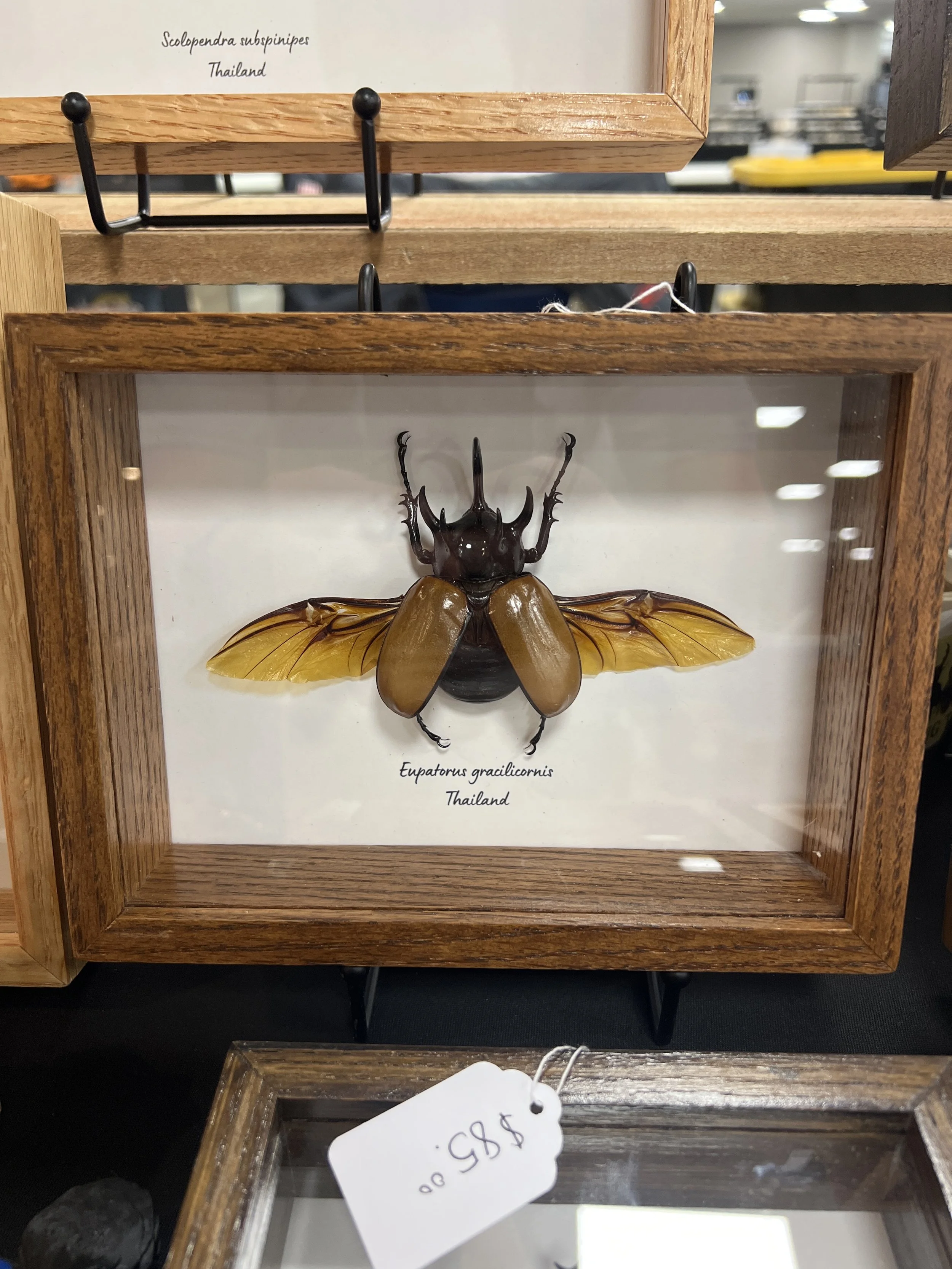 Image 2 of 4
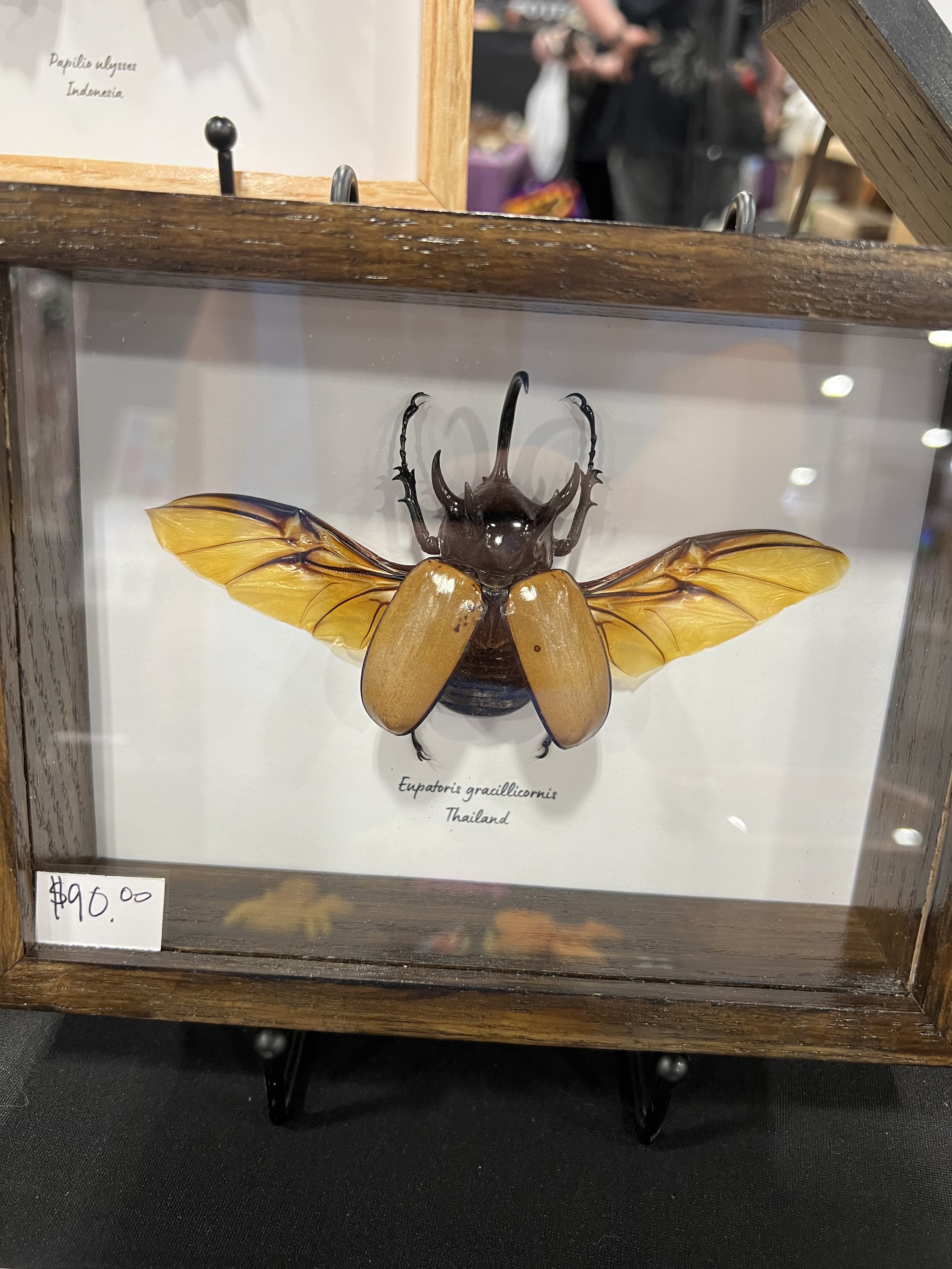 Image 3 of 4
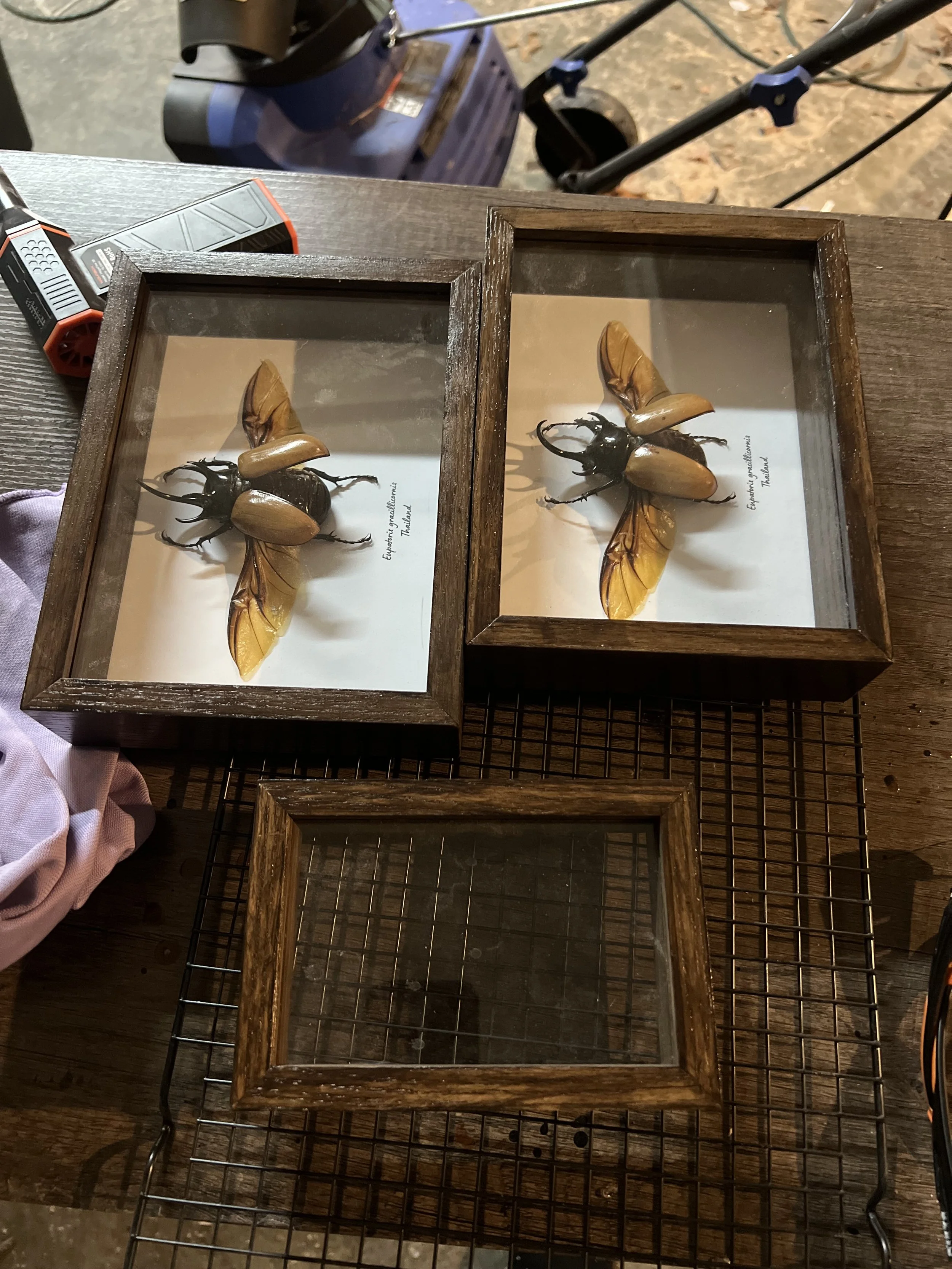 Image 4 of 4
Eupatoris gracilicornis — slender-antennaed jewel of understory shadows — pinned, mounted, and displayed in a hand-crafted oak shadow box. The beetle’s elongated body sits poised on a pale card, legs splayed in a natural stance, antennas like fine filigree arching beyond its silhouette. Its elytra are a muted iridescence: at a glance a deep chestnut, then, depending on light, whispering hints of green and copper. Delicate striations run the length of the wing covers, and tiny punctures catch the eye like constellations, reminding you that this small creature is both sculpture and living history.
The oak shadow box is a quiet act of craft. Warm grain lines ripple along the frame, hand-planed edges softened by the maker’s palm. The interior is set back enough to give the beetle room to breathe, a restrained negative space that lets the specimen become the focal point without shouting. A soft linen backing in a muted ecru cradles the pinned card, its texture echoing the beetle’s own subtle patterns. Brass pins, chosen for their warm luster, hold the piece with respectful restraint rather than mechanical coldness. The joinery is visible only if you look for it — dovetails that signal patience and care, not showmanship.
Together, insect and frame form a small shrine to noticing. There’s a meditative delight in the proportions: the tiny, precise anatomy of Eupatoris gracilicornis contrasted with the generous, human-scale sweep of the oak grain. The display encourages close looking — the way light skims an antenna’s curve, the microsculpture of the thorax, the almost floral symmetry of the legs. It prompts questions: Where did this beetle travel? What leaf did it rest upon? What season’s hush carried it here?
This is appreciation made tangible. The shadow box doesn’t trap the beetle in a cabinet of curiosities for morbid spectacle; it elevates a modest life into an invitation to wonder. The handcrafted frame honors both the maker’s hands and the insect’s small perfection, reminding us that beauty often lives in the overlooked. In that quiet combo of oak and exoskeleton, the natural world and human craft meet — a compact, eloquent testament to curiosity, care, and the joy of seeing closely.
Eupatoris gracilicornis — slender-antennaed jewel of understory shadows — pinned, mounted, and displayed in a hand-crafted oak shadow box. The beetle’s elongated body sits poised on a pale card, legs splayed in a natural stance, antennas like fine filigree arching beyond its silhouette. Its elytra are a muted iridescence: at a glance a deep chestnut, then, depending on light, whispering hints of green and copper. Delicate striations run the length of the wing covers, and tiny punctures catch the eye like constellations, reminding you that this small creature is both sculpture and living history.
The oak shadow box is a quiet act of craft. Warm grain lines ripple along the frame, hand-planed edges softened by the maker’s palm. The interior is set back enough to give the beetle room to breathe, a restrained negative space that lets the specimen become the focal point without shouting. A soft linen backing in a muted ecru cradles the pinned card, its texture echoing the beetle’s own subtle patterns. Brass pins, chosen for their warm luster, hold the piece with respectful restraint rather than mechanical coldness. The joinery is visible only if you look for it — dovetails that signal patience and care, not showmanship.
Together, insect and frame form a small shrine to noticing. There’s a meditative delight in the proportions: the tiny, precise anatomy of Eupatoris gracilicornis contrasted with the generous, human-scale sweep of the oak grain. The display encourages close looking — the way light skims an antenna’s curve, the microsculpture of the thorax, the almost floral symmetry of the legs. It prompts questions: Where did this beetle travel? What leaf did it rest upon? What season’s hush carried it here?
This is appreciation made tangible. The shadow box doesn’t trap the beetle in a cabinet of curiosities for morbid spectacle; it elevates a modest life into an invitation to wonder. The handcrafted frame honors both the maker’s hands and the insect’s small perfection, reminding us that beauty often lives in the overlooked. In that quiet combo of oak and exoskeleton, the natural world and human craft meet — a compact, eloquent testament to curiosity, care, and the joy of seeing closely.