
 Image 1 of 1
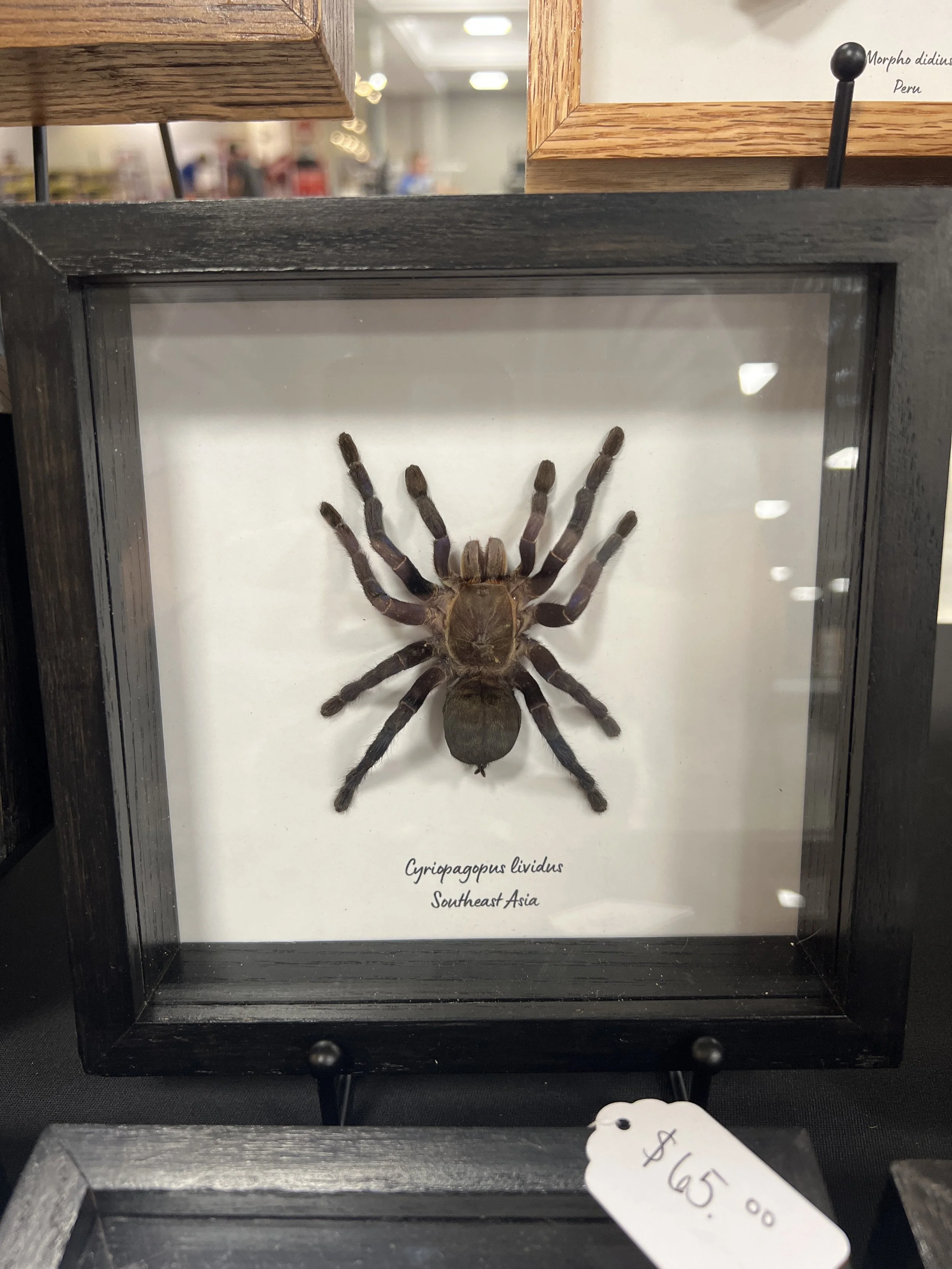
Cyriopagopus lividus — a velvet jewel of Southeast Asian forests — reclines in a hand-crafted oak shadowbox like a secret plucked from the understory and set to rest beneath glass.
In the wild
Habitat: Native to Myanmar and parts of Thailand, C. lividus favors humid, shaded forest floors. It carves burrows into root tangles and leaf litter, lining them with silk to create a cool, deliberate home where it waits for night to fall.
Behavior: Primarily nocturnal ambushers, these tarantulas are patient sit-and-wait predators. They sense vibrations and rush out in a controlled burst to seize crickets, beetles, and other invertebrates. Their temperament in nature is a careful economy of movement—sudden but purposeful.
Adaptations: Thickly set legs and dense hairs help them navigate damp soil and detect prey. Their burrowing lifestyle offers protection from predators and fluctuating weather, while their cryptic coloration blends with shadow and decay.
Role in the ecosystem: As both predator and prey, they help regulate insect populations and serve as a food source for larger animals. Their burrows aerate the soil and contribute to the microhabitat complexity of the forest floor.
The beauty of the specimen
Color and texture: C. lividus is striking for its deep, velvety indigo carapace and legs—near-black with hints of blue that shift depending on light and angle. The hairs across the abdomen often have subtle metallic sheens, lending a living gemstone quality even after preservation.
Form and presence: Encased in a hand-crafted oak shadowbox, the spider’s silhouette becomes sculptural. The dark, warm grain of the oak frames the specimen, drawing out the cool blues and velvety blacks. The shadowbox depth lets the spider appear as if peering from its burrow, preserving a sense of its natural posture and poise.
Craftsmanship meets natural history: The oak shadowbox provides a tactile counterpoint to the spider’s softness—polished wood warmth against the spider’s matte, intricate texture. Carefully mounted on a neutral background, the specimen occupies negative space with authority; every limb, every subtle iridescent hair is given room to be admired without distraction.
Emotional effect: Viewers often feel a blend of wonder and respect. The specimen invites a closer look—an intimate encounter with a creature adapted to darkness, now displayed to reveal the artistry of evolution. It’s both museum piece and conversation starter: beautiful, slightly uncanny, undeniably alive in memory.
A piece like this is for those who love the wild’s quieter masterpieces. The Cyriopagopus lividus in oak becomes more than a specimen—it’s a preserved vignette of a shadowy forest life, an objet d’intrigue that celebrates form, function, and the subtle drama of a tarantula’s world.
Cyriopagopus lividus — a velvet jewel of Southeast Asian forests — reclines in a hand-crafted oak shadowbox like a secret plucked from the understory and set to rest beneath glass.
In the wild
Habitat: Native to Myanmar and parts of Thailand, C. lividus favors humid, shaded forest floors. It carves burrows into root tangles and leaf litter, lining them with silk to create a cool, deliberate home where it waits for night to fall.
Behavior: Primarily nocturnal ambushers, these tarantulas are patient sit-and-wait predators. They sense vibrations and rush out in a controlled burst to seize crickets, beetles, and other invertebrates. Their temperament in nature is a careful economy of movement—sudden but purposeful.
Adaptations: Thickly set legs and dense hairs help them navigate damp soil and detect prey. Their burrowing lifestyle offers protection from predators and fluctuating weather, while their cryptic coloration blends with shadow and decay.
Role in the ecosystem: As both predator and prey, they help regulate insect populations and serve as a food source for larger animals. Their burrows aerate the soil and contribute to the microhabitat complexity of the forest floor.
The beauty of the specimen
Color and texture: C. lividus is striking for its deep, velvety indigo carapace and legs—near-black with hints of blue that shift depending on light and angle. The hairs across the abdomen often have subtle metallic sheens, lending a living gemstone quality even after preservation.
Form and presence: Encased in a hand-crafted oak shadowbox, the spider’s silhouette becomes sculptural. The dark, warm grain of the oak frames the specimen, drawing out the cool blues and velvety blacks. The shadowbox depth lets the spider appear as if peering from its burrow, preserving a sense of its natural posture and poise.
Craftsmanship meets natural history: The oak shadowbox provides a tactile counterpoint to the spider’s softness—polished wood warmth against the spider’s matte, intricate texture. Carefully mounted on a neutral background, the specimen occupies negative space with authority; every limb, every subtle iridescent hair is given room to be admired without distraction.
Emotional effect: Viewers often feel a blend of wonder and respect. The specimen invites a closer look—an intimate encounter with a creature adapted to darkness, now displayed to reveal the artistry of evolution. It’s both museum piece and conversation starter: beautiful, slightly uncanny, undeniably alive in memory.
A piece like this is for those who love the wild’s quieter masterpieces. The Cyriopagopus lividus in oak becomes more than a specimen—it’s a preserved vignette of a shadowy forest life, an objet d’intrigue that celebrates form, function, and the subtle drama of a tarantula’s world.